 Skip to content


FIGHTING HUNGER
The issue of hunger can often seem too big to reckon with. It affects millions of people but can be hard to spot on an individual level. Its causes are many—ranging from unreliable transportation to the income gap, unexpected medical bills, childcare costs, and more—making it tough to address broadly. We at Forgotten Harvest believe that, with more of us involved, there is a way forward that leads to hunger-free communities. Continue (or start!) your food security advocacy with us below.
HUNGER AND FOOD INSECURITY
“Hunger” and “food insecurity” are often used interchangeably, but there are key differences between them.
Hunger is the physical sensation of discomfort or pain people experience due to a lack of food.
Food insecurity describes the condition of having limited or uncertain access to adequate food for everyone in a household. Food insecurity also happens on a scale:
“Low food security” refers to a reduced quality, variety, or desirability of food while still having enough quantity.
“Very low food security” refers to the experience of regularly not knowing if there will be food available to eat or not having enough to eat.
It’s inaccurate to say that everyone who experiences hunger experiences food insecurity and that food-insecure people are hungry every day of their lives. However, for our purposes here, we’ll use “hunger” to refer to the broader public issue of food insecurity and chronic hunger.
WHAT SHOULD I KNOW?
Despite the United States being the most prosperous country in the world, 13.7% of our population experienced food insecurity in 2024, according to the most recent survey data from the U.S. Department of Agriculture.
In Michigan, food insecurity affects 1.5 million people, or around 15.4% of our state’s population. In tri-county Metro Detroit, that breaks down to more than 589,000 people, or about 1 in 7 individuals—meaning we all likely know someone in our social network who regularly does not have enough food for adequate nourishment.
experienced food insecurity.
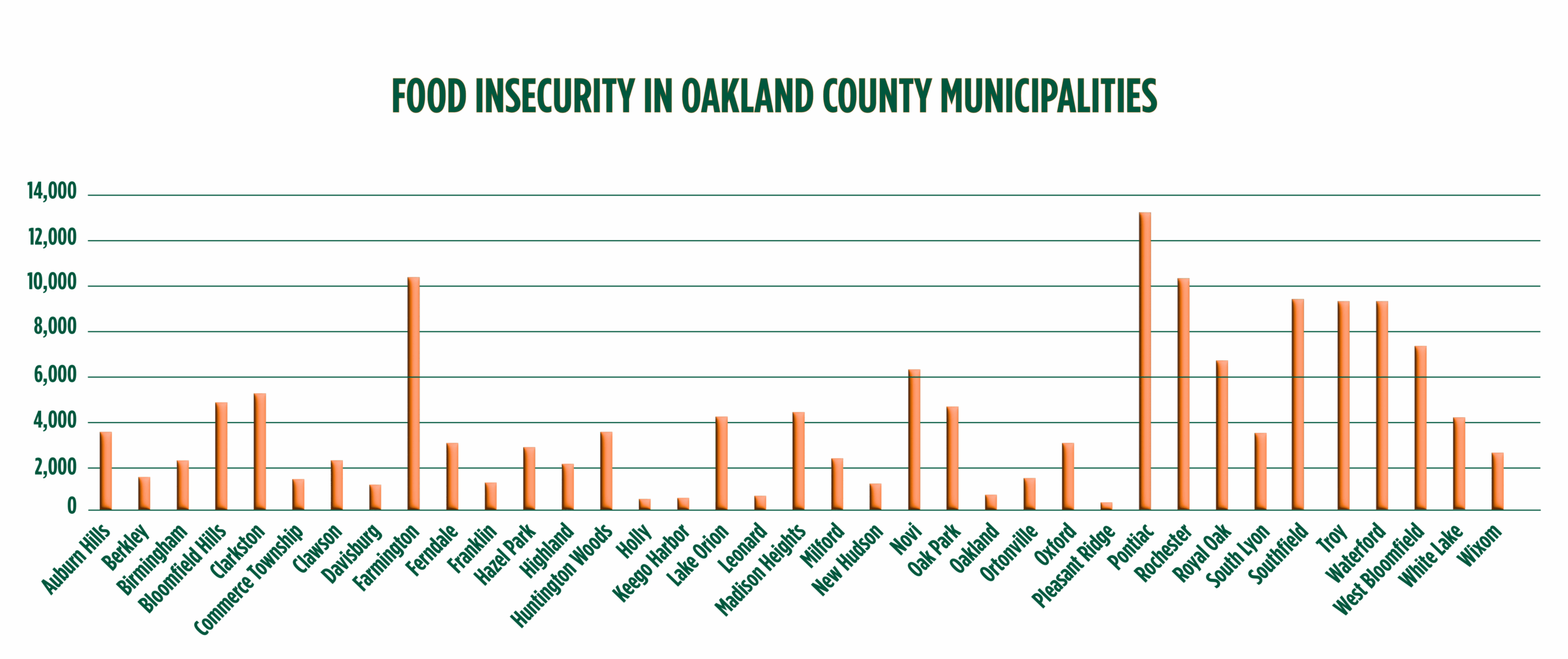
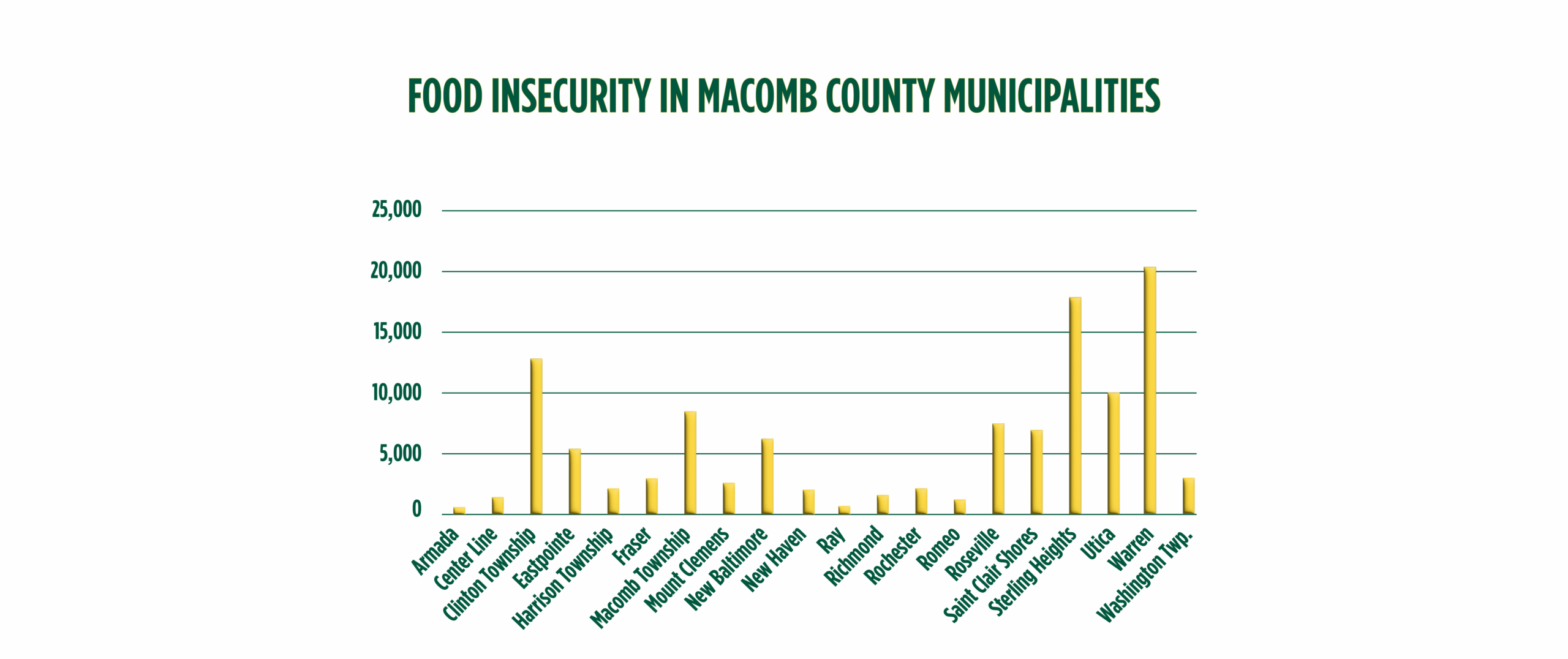

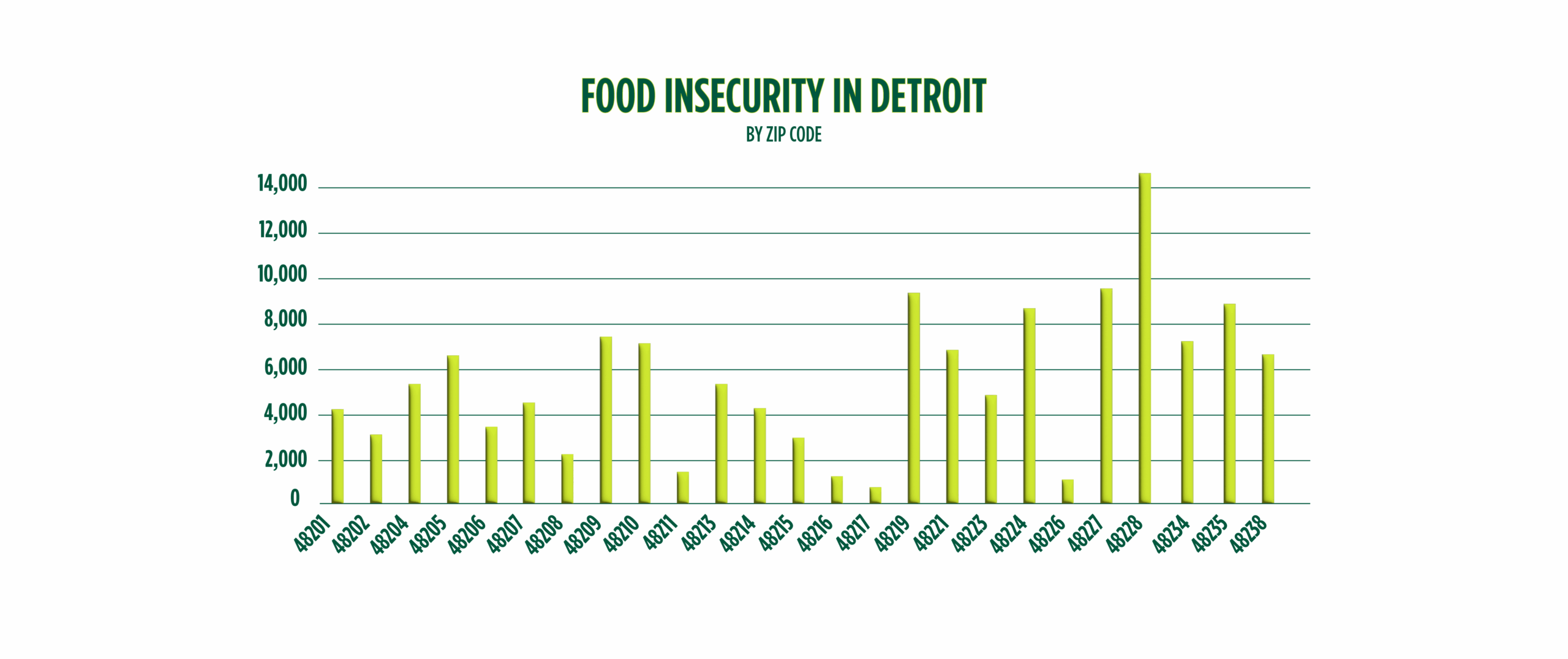
Hunger creates physical, emotional, and social stress, particularly when it is a chronic condition. None of us functions or performs as well when we’re hungry; we’re not able to think as clearly, we lack energy to complete routine tasks, and we become more irritable.
Beyond our day-to-day, food insecurity exacts deeper costs. It impedes physical and mental development in children and worsens chronic conditions experienced by adults. Education and healthcare expenses rise while productivity and lifetime earnings fall, costing Michigan’s economy billions of dollars each year.
Organizations like Forgotten Harvest help to empower our communities by providing one of our basic needs for free—but we aren’t the entire solution. As emergency food providers, we’re filling a specific need. To address the root causes of hunger, we need to collaborate with policymakers who can help enact broader change in people’s lives.
WHO DOES FOOD INSECURITY AFFECT?
Michigan
19.1% of all children (402,680) and 8.2% of all seniors aged 60+ (206,580)

Nationally
35% of all single mothers and 23% of all single fathers
TAKE ACTION
Raising awareness about hunger as a public policy problem helps generate meaningful action toward a hunger-free society. Because food insecurity is less visible and more widespread, it can be hard to know how to approach it.
Food rescue organizations, like Forgotten Harvest, and other food banks experienced in fighting neighborhood hunger know solutions lie in expanded access to nutritious and culturally appropriate food, increased funding and removal of other barriers to food assistance programs, active cross-sector collaboration to create innovative new approaches to hunger, and thoughtful increases in the capacity of organizations already fighting hunger.
Here are a few steps each of us can take to help raise awareness about the extent of hunger in our neighborhoods and communities:
 Join the Harvest Advocacy Network
Hunger isn’t just a problem, it’s a policy issue.
Join a growing community of advocates working to make sure everyone in Metro Detroit has access to the food they need.
Take action. Stay informed. Be part of the change.
Fill in your info to get started and tell us how you’d like to get involved.
You can choose things like: advocacy alerts, volunteering, events, policy updates, or urgent action opportunities.