Skip to content

Those of us who are fortunate enough to eat regularly and well are still familiar with what it means to be hungry. Maybe we woke up late, missed breakfast and found ourselves in a fog by mid-morning. Or maybe we had a busy day at work, missed lunch, and feel ‘hangry’ in the late afternoon. We may be hungry, at that moment, but we are still ‘food secure’ – that is, we have both physical and financial access to sufficient, safe, and nutritious food that meets our dietary needs and preferences in order for us to lead active, healthy lives.
The people and neighbors to whom Forgotten Harvest and our pantry partners provide food tend to be ‘food insecure’,meaning they live with persistent or recurring economic or social conditions that limit or make access to food uncertain. People experiencing ‘low food security’ make compromises on the quality, variety or regularity with which they eat. People with very low food security literally do not know where their next meal is coming from.
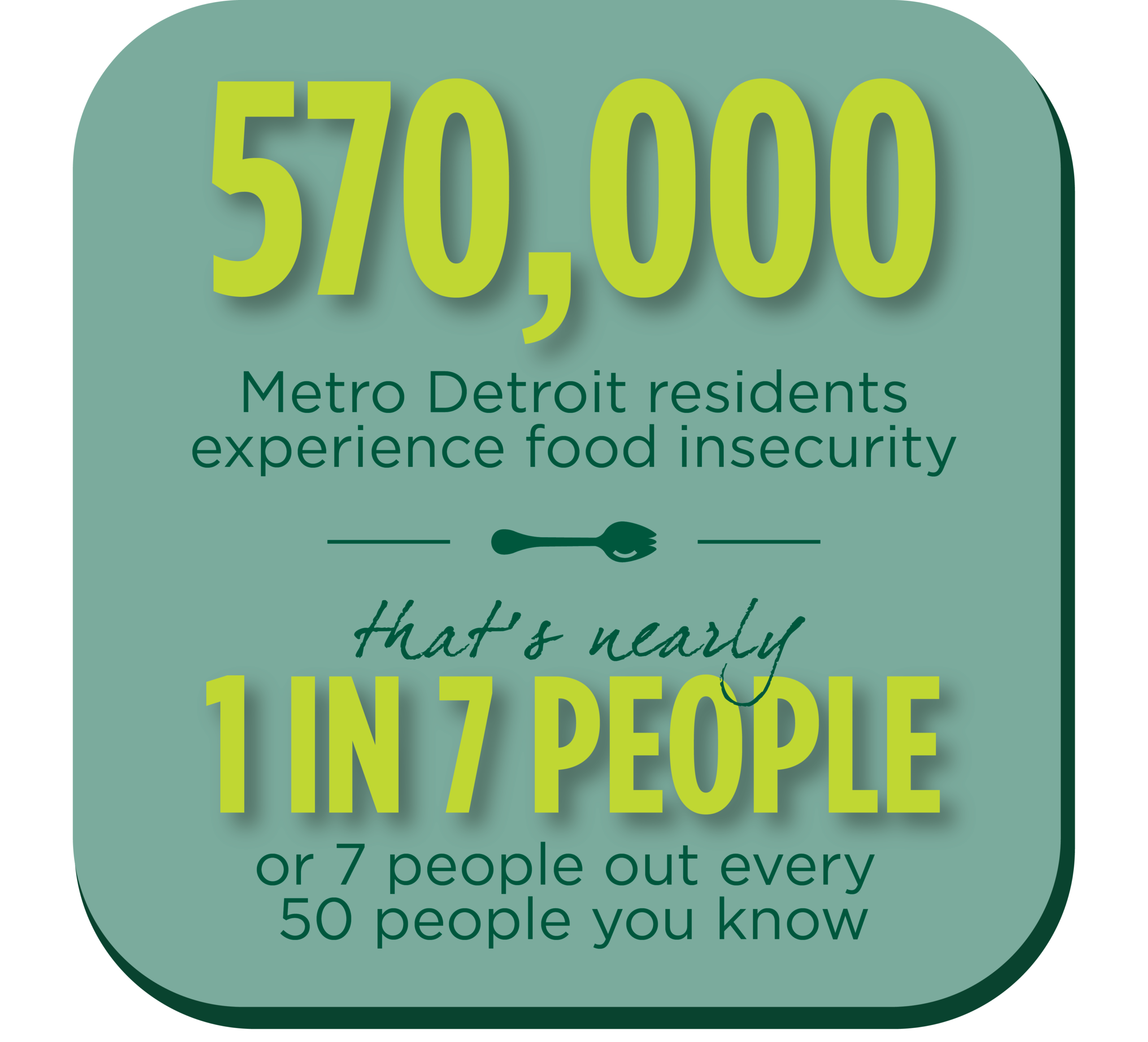
In Wayne, Oakland and Macomb Counties, approximately 14.55 percent of the population (572,000 people) experience some form of food insecurity. This means if there are 50 people in your social network – friends, family members, neighbors, colleagues at work, etc. – 7 of them are experiencing food insecurity. You know people who do not have enough food to eat.
Food insecurity can be caused by many social and economic factors. The most obvious is the rising cost of living – higher prices for food, housing, utilities, child and health care, etc. leave many families making impossible choices between meals or medicine, gas or groceries. Unreliable access to transportation plays a role, as does living in an unsafe neighborhood or having a physical disability. Low wage jobs, unreliable work schedules and unemployment also contribute to food insecurity. A May 2026 report from the U.S. Federal Reserve found that 37 percent of people in the United States would be unable to pay for a sudden, $400 emergency expense. When money is tight, people skimp on food to make ends meet.
If you have read this far, you likely possess the interest and compassion to want to help the family member, friend or colleague who may be struggling to afford the basic necessities of life. If you need additional reasons, know that food insecurity costs Michigan’s economy billions of dollars annually in lost productivity, uncompensated health care expenses, remedial education and public safety spending. In this sense, everyone’s quality of life is diminished when people in our communities are food insecure.
But when everyone has enough food to keep their bodies and brains healthy and nourished, we can all lead better, more productive lives.

 Join the Harvest Advocacy Network
Hunger isn’t just a problem, it’s a policy issue.
Join a growing community of advocates working to make sure everyone in Metro Detroit has access to the food they need.
Take action. Stay informed. Be part of the change.
Fill in your info to get started and tell us how you’d like to get involved.
You can choose things like: advocacy alerts, volunteering, events, policy updates, or urgent action opportunities.