Skip to content


Authored by Eric Candela, Director of Government Relations
Listening to the news on the way home from work back in May, a commentator shared that one reason Spirit Airlines went bankrupt is because there was a sharp decrease in flights taken by cost-conscious travelers. A second report a few minutes later announced that one of the stock indexes hit a historic high that day. It was at that moment that the reality of simultaneously living with two different economies hit me. More and more people are increasingly food insecure and struggling to make ends meet, even as markets climb and unemployment remains relatively low.
The United Way’s ALICE methodology helps illustrate how people who are seemingly doing everything right, can still struggle to meet everyday expenses – like having enough food to eat. ALICE is an acronym that stands for Asset-Limited, Income-Constrained, Employed. ALICE describes people who are working – often multiple jobs – but who do not earn enough to afford daily living expenses.
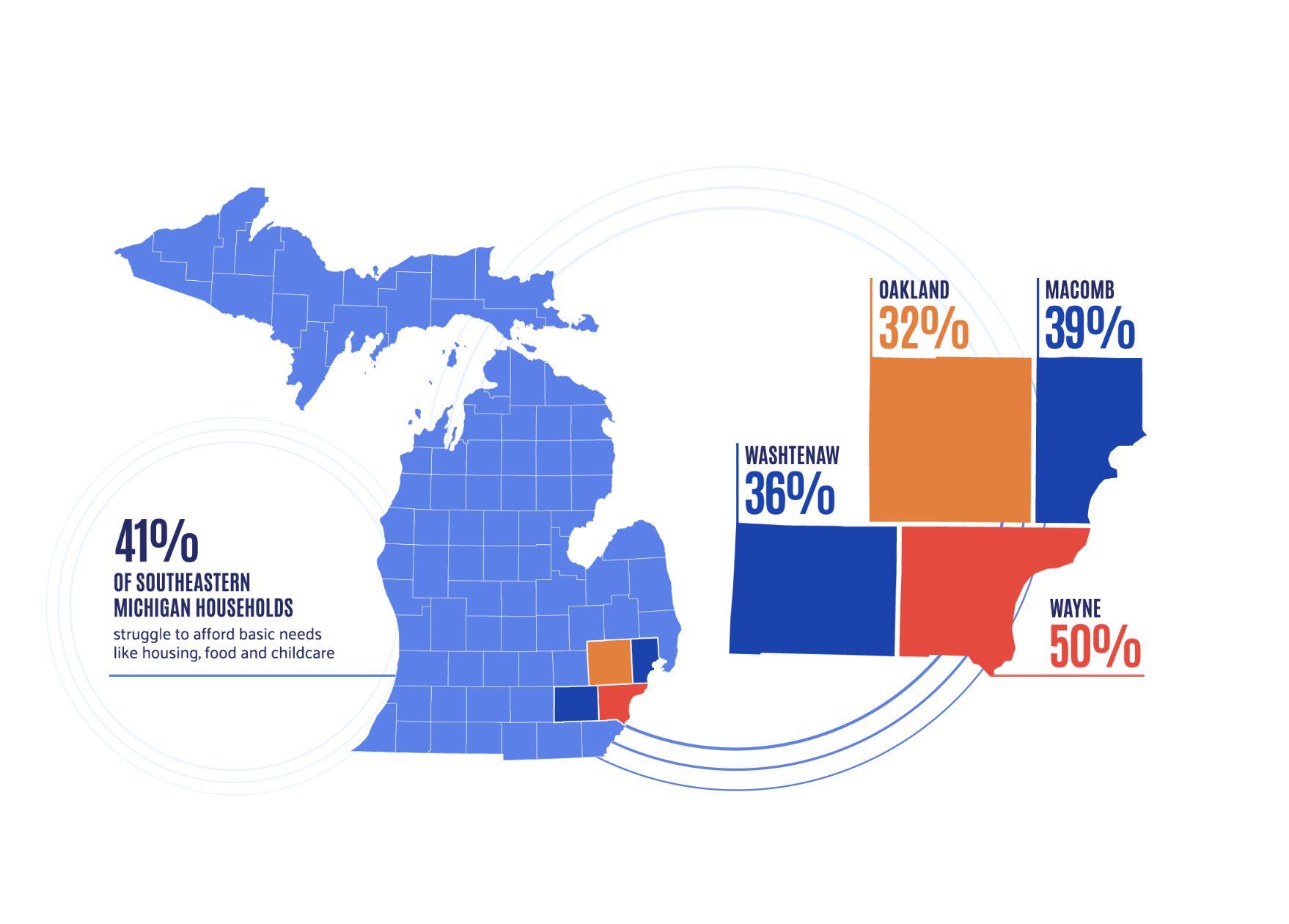
ALICE considers the fair-market costs, by zip code, for eight different categories of daily living expenses – housing, food, transportation, childcare, health care, technology, miscellaneous (i.e. diapers, school supplies, etc.) and taxes. This budget does not include expenses that are incidental for many of us, things like new clothes, birthday presents or eating out. More importantly, it also does not include savings for unexpected costs or for aspirational goals like increased education, homeownership or retirement.
A single person in Southeast Michigan needs to earn $29,580 just to meet their ALICE living expenses. A Senior Citizen, older than 65 years, needs an annual income of $32,880, equal to an hourly wage of $16.44. Finally, a family of four consisting of two parents, an infant and preschooler needs an annual income of $78,216 just to meet the ALICE threshold
Eligibility for many government assistance programs, like SNAP, is indexed to the Federal Poverty Level; a different, much lower threshold than ALICE. The Federal Poverty Level for a single adult living in Southeast Michigan is $15,960; for a family of 4 it is $33,000 in gross income. An individual or family with gross income above those thresholds will, in most cases, not be eligible for SNAP benefits. A pattern emerges where the individual earns too much to qualify for SNAP benefits but not enough to eat regularly, which snowballs into other financial, health and safety problems.
Understanding how much income is required to eke out an existence, compared to the threshold at which SNAP benefits are no longer available, helps explain how food insecurity can be worsening even as the stock market is achieving historic highs.

 Join the Harvest Advocacy Network
Hunger isn’t just a problem, it’s a policy issue.
Join a growing community of advocates working to make sure everyone in Metro Detroit has access to the food they need.
Take action. Stay informed. Be part of the change.
Fill in your info to get started and tell us how you’d like to get involved.
You can choose things like: advocacy alerts, volunteering, events, policy updates, or urgent action opportunities.